
Sonar Leak Detection in Round Rock, TX
Acoustic sonar sends a pulse down a pipe and reads the reflections that come back. Those reflections map what is inside: where the bore narrows, where a joint has shifted, where a crack has opened, and where water is escaping.
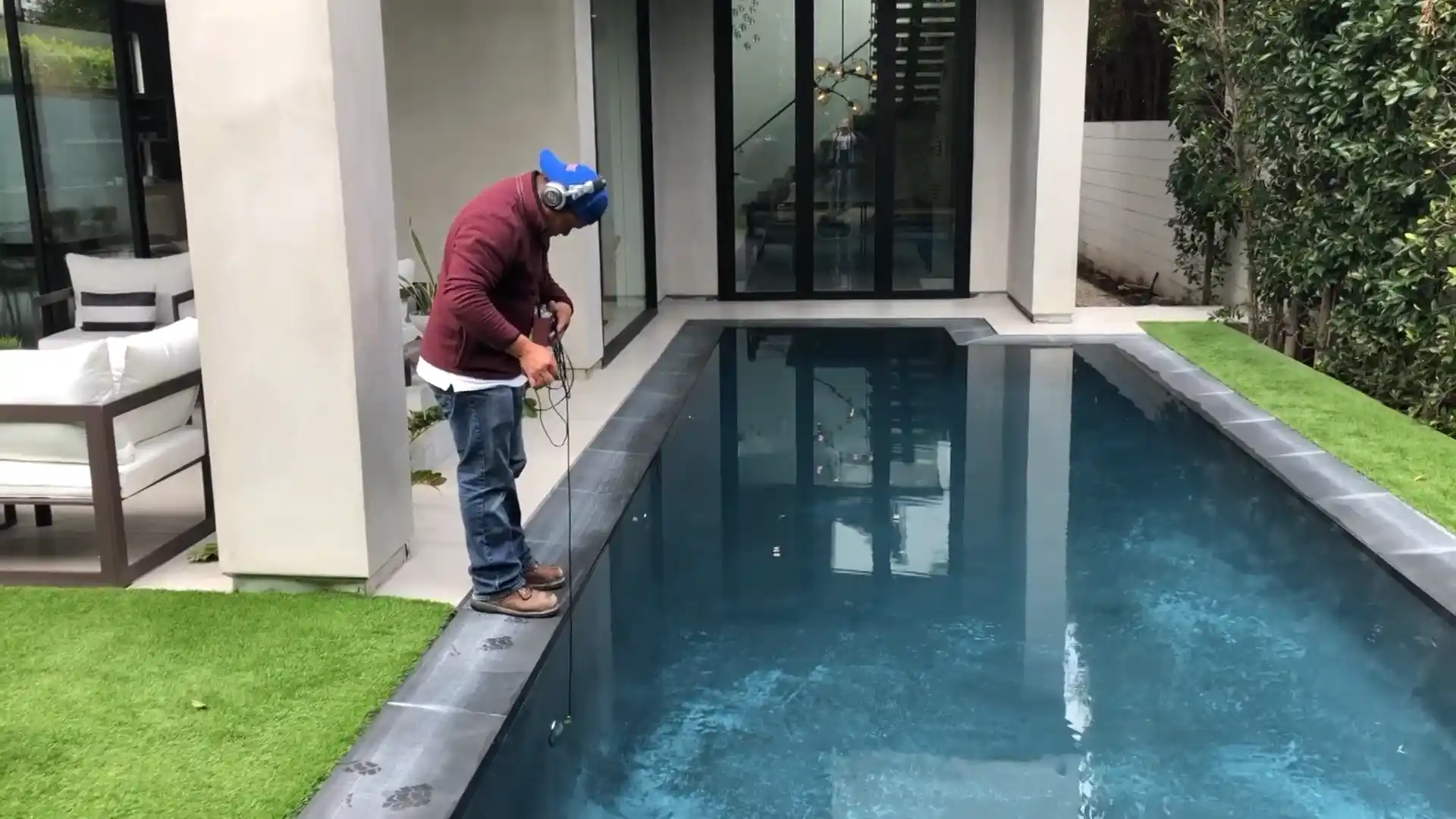
What sonar adds to pipe inspection
Most leak detection listens from the outside, picking up the sound of escaping water through soil or wall. Sonar works in the opposite direction. A transmitter lowered or pushed into the pipe sends an acoustic pulse outward, and the receiver reads the reflections that return from the pipe wall. A sound bore produces a clean, consistent reflection. A crack, a collapsed section, a displaced joint, or a buildup of debris each returns a different echo signature. The result is an internal profile of the pipe without opening it.
In Round Rock neighborhoods connected to the Brushy Creek sewer system, the laterals running from the house to the main are aging alongside the houses. Some of those lines have never been inspected since installation.
When sonar is the right tool
Sonar earns its place on sewer laterals, main drains, and larger buried pipe where the problem might be structural rather than a pressurized pinhole. A sewer lateral that is cracked, bellied, or has a displaced joint is losing water without any line pressure to create acoustic noise. Passive listening finds nothing; sonar images the interior and shows the failure directly. It is also useful for confirming that a repaired section is clean and holds the correct bore before backfilling.
If a sewer line is backing up, flowing slowly, or a yard shows a persistently wet strip along the sewer run, call (512) 737-6168 and sonar can image what is happening inside.
The imaging process
We access the line through a cleanout or a removed fixture, lower the sonar head into the pipe, and draw it back at a controlled pace while the unit records reflections at intervals. The profile that builds up shows the pipe cross-section at each point: intact sections read as smooth concentric echoes, failures read as asymmetric or missing returns. Where the profile shows a defect, we mark the position along the run and pair it with a surface location measurement to know exactly where above ground the repair needs to go.
What it finds that other methods miss
Sonar catches the category of problems passive acoustic and thermal methods are not designed for. A sewer belly, where settling soil has caused the pipe to sag and hold standing water, creates no leak sound and no surface temperature change. A cracked lateral that leaks only when waste flows through it is silent between uses. A partially collapsed section that is about to become a full blockage has no pressurized leak to hear. All three show clearly on an internal profile. Combined with a camera inspection when the line has debris, sonar adds the dimensional picture the camera cannot always produce alone.
After the profile: targeted repair
The value of sonar is the precision it brings to the repair that follows. A structural defect located to a specific distance along the lateral means the excavation or lining procedure targets one measured spot rather than the whole run. A confirmed clean section avoids unnecessary opening. Where the profile shows widespread deterioration throughout the lateral, we will present the choice between a targeted spot fix and a full lateral replacement clearly so the decision is informed. Call (512) 737-6168 if a sewer line needs inspection before anything else opens.
Not sure what you are dealing with? Talk it through.
📞 (512) 737-6168Frequently Asked Questions
How is sonar different from a sewer camera inspection?
A camera shows the visual surface of the pipe interior. Sonar uses acoustic pulse reflections to map the bore geometry: how round the pipe is, where it has deformed, displaced, or collapsed. Both provide useful information, and they are often used together.
Can sonar find a sewer leak that has no smell or backup?
Yes. A cracked or displaced lateral leaks only when waste flows, so it produces no constant sound and no pressurized signal. The sonar profile shows the defect at rest, before it causes a backup or surface stain.
How do you know where the defect is above ground?
We measure the distance along the pipe from the access point. A marked distance on the line, combined with knowing where the cleanout is, gives us the surface location to mark for excavation or lining.
Related leak services
Soggy yards and sewer odor from aging cast iron laterals.
View → UndergroundWet patches and a moving meter from buried lines in the yard.
View → Acoustic DetectionGround microphones follow the vibration of escaping water to the source.
View →Browse all 54 services Areas we cover · Leak guides on the blog