
Acoustic Leak Detection in Round Rock, TX
Pressurized water escaping through a crack makes noise. Acoustic detection picks up that noise through the soil and the pipe wall and follows it back to the precise point where the pressure is escaping. That path from sound to source is what makes the method non-invasive: no ground opens until the signal leads us there.
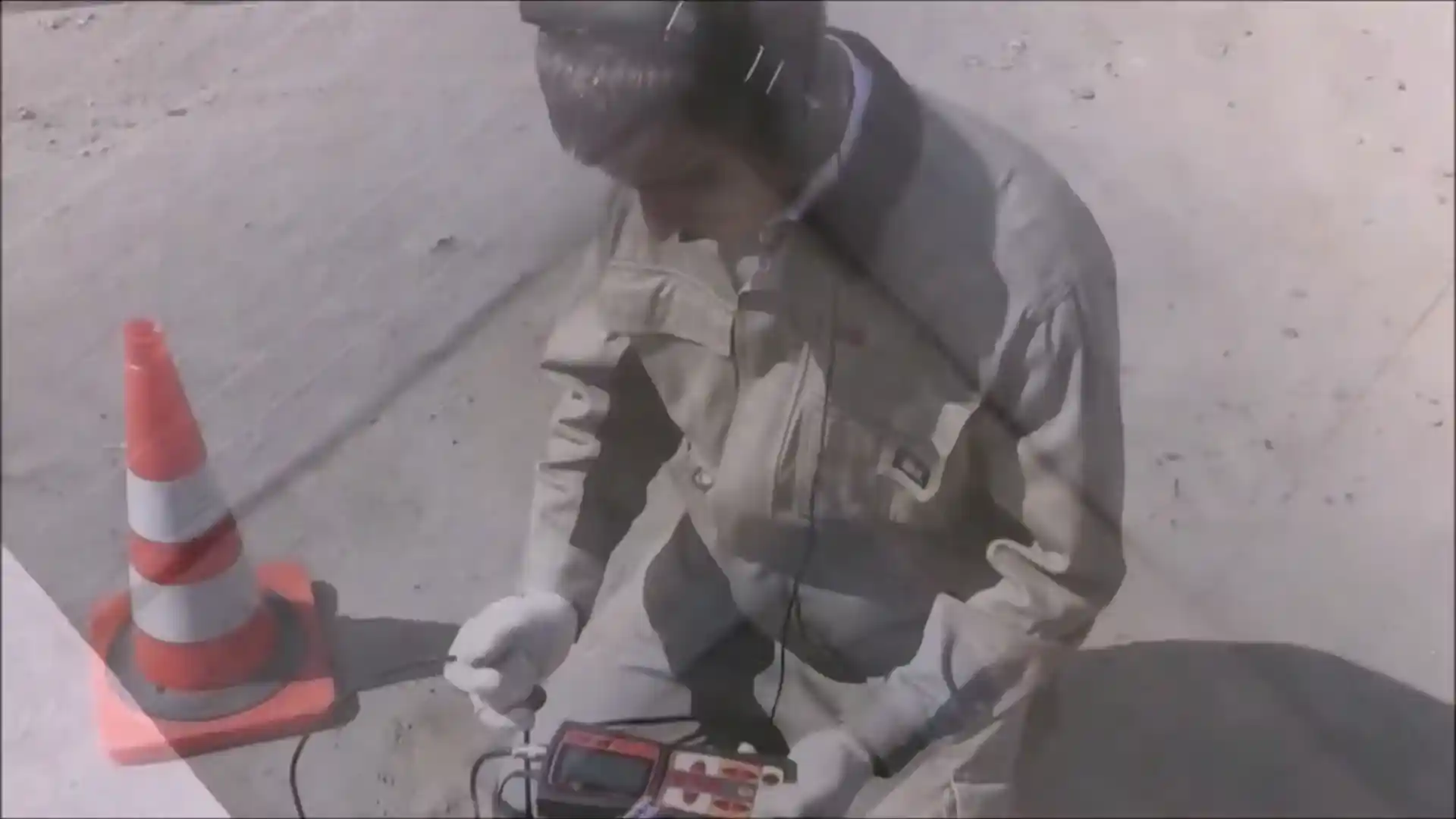
How sound travels from a leak
When water forces its way out of a pressurized pipe, the turbulence at the breach point creates vibration. That vibration travels outward through surrounding soil or concrete, and also along the pipe wall itself. A ground microphone pressed to the surface above a buried line picks up both, and the signal is strongest directly above the leak. Moving the microphone a few feet and watching the amplitude drop is what produces a precise location rather than a zone.
Round Rock sits at the boundary between Hill Country limestone to the west and Blackland Prairie clay to the east. Limestone carries acoustic vibration a long distance cleanly; clay dampens it. That contrast tells us how far apart to space listening points and how much amplification to expect on each side of town.
Ground microphones and contact discs
The primary instrument is an electronic ground microphone connected to a signal amplifier that filters background noise to isolate the frequency band a pressurized water leak generates. For buried lines we press the sensor to the surface at intervals along the suspected run, working toward the peak. For a slab leak a contact disc goes directly on the concrete to avoid the air-coupling losses a gap between sensor and surface creates.
If your meter is turning with everything off and the line is buried, call (512) 737-6168 and we can walk the run acoustically.
Acoustic correlation
Correlation adds a second sensor and mathematics. Two microphones attach to the pipe at known points on either side of the suspected section, both feeding a digital correlator. The unit measures the tiny time delay between when leak vibration arrives at each sensor, then uses the pipe length and material to calculate exactly where between the two contact points the source sits. Correlation is useful on long plastic runs where the signal is weaker, and on pipes buried under paving where you cannot freely walk above the line.
What acoustic cannot do
No single method works everywhere. Acoustic listening struggles in noisy environments, on soft plastic pipe that absorbs vibration instead of transmitting it, and at very low pressures where the escaping water barely generates signal. It also has difficulty distinguishing a leak from a valve cracked slightly open, which sounds similar. When the acoustic result is ambiguous we add a second method rather than committing to a dig on a weak reading.
Ground conditions also dictate sensor spacing. On the limestone west side, a single listener can hear a leak signal from several feet away, so spacing points farther apart still produces a readable gradient. On the clay east side, the signal drops off quickly and spacing must be tighter to catch the peak. Adjusting for the soil rather than using a fixed grid is what turns a general area into a precise spot.
Why it is usually the starting point
Most buried supply and slab investigations start with acoustic because it is non-invasive, covers ground quickly, and works reliably on the copper, PVC, and galvanized steel of most Round Rock supply systems. The signal from a pressurized leak on these materials is consistent enough for a confident locate on most sites. For the cases where it falls short, we move to correlation, tracer gas, or helium. Call (512) 737-6168 to get a buried or slab leak traced without opening the ground on a guess.
Not sure what you are dealing with? Talk it through.
📞 (512) 737-6168Frequently Asked Questions
How does acoustic detection find a slab leak?
A contact disc placed on the concrete picks up vibration from the pressurized leak below. We move it along the run and read amplitude, which peaks directly above the break.
Can acoustic detection work on plastic pipe?
Less reliably than on copper or steel, because plastic absorbs vibration rather than transmitting it. Correlation or tracer gas is more effective on long buried plastic runs.
How accurate is the location?
On a clear signal in good conditions, typically within a foot or two. Correlation improves precision further by adding the time-delay calculation to the amplitude reading.
Related leak services
Warm floors and a creeping meter on Round Rock slab foundations.
View → UndergroundWet patches and a moving meter from buried lines in the yard.
View → Electronic DetectionEM pipe tracing and digital correlation triangulate the leak before any digging.
View → Water MeterMeter-based diagnosis before we dispatch.
View →Browse all 54 services Areas we cover · Leak guides on the blog