
Ceiling Leak Detection and Repair in Round Rock, TX
A ceiling stain is the end of the story, not the start. The water came from somewhere above and traveled along the framing, so finding the source means looking up and back, not just at the spot that is wet.
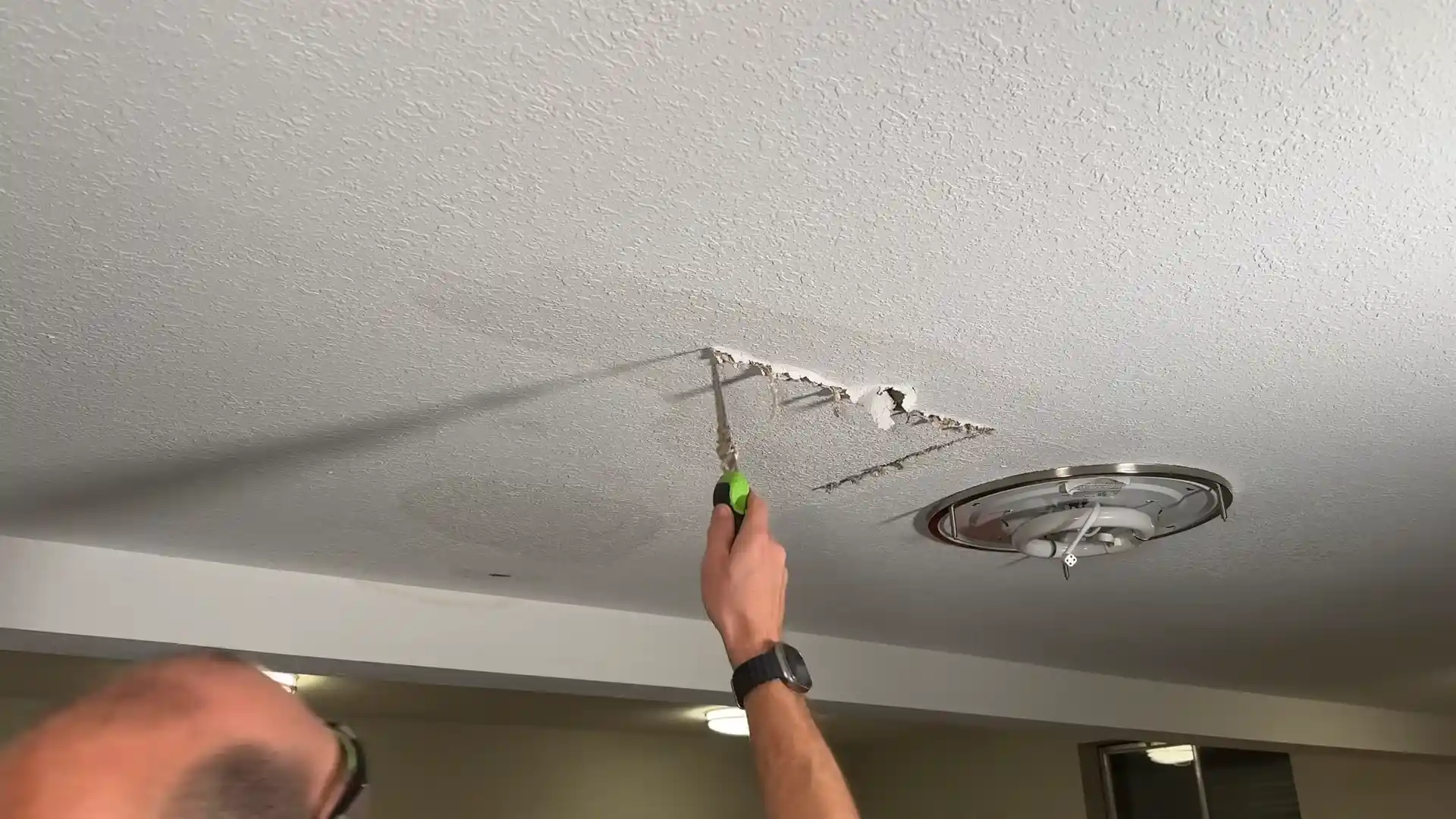
What a ceiling stain is telling you
A brown ring, a soft sag, or paint that bubbles overhead all mean water has been sitting above the drywall. The trouble is that the stain marks where the water finally dripped through, which is rarely under the actual leak. Water runs along a joist or a duct until it finds a seam, then drops. The wet spot is a clue to follow, not the answer.
In a two-story Forest Creek home, a first-floor ceiling stain usually points at the bathroom or laundry directly above. We start there and work back to the real source.
The usual sources above a ceiling
Four things commonly feed a ceiling leak. A supply or drain line in the floor above, a tub, shower, or toilet on the upper level, an HVAC condensate line or pan in the attic, or the roof itself. Each leaves a slightly different signature. A pressurized supply leak drips around the clock and shows on the meter. A drain or fixture leak only wets the ceiling when that fixture runs, and a condensate or roof leak tracks with the weather.
Reading which pattern you have narrows the search before we open anything.
The season helps too. A leak that worsens on the hottest days often points at an attic air handler, whose condensate line clogs and overflows when the system runs hardest. A leak that tracks with a storm leans toward the roof. One that ignores both the weather and the thermostat, and simply drips whenever an upstairs fixture is used, is plumbing. We weigh those clues together before climbing into the attic.
Finding the source without opening the whole ceiling
We confirm the pattern first, then locate. The meter tells us if a pressurized line is losing water. A moisture meter maps how far the water has spread across the ceiling, and thermal imaging reads the cool trail back toward its origin. We run the suspect fixtures above and watch the ceiling respond. Only then do we open one small access point at the source, rather than chasing the stain across the drywall.
If your ceiling is staining or starting to sag, call (512) 737-6168 so we can find it before a section comes down.
Repairs at the source
The repair depends on what we find above. A failed supply or drain line gets a section replacement or reroute through the smallest opening needed. A leaking fixture above is repaired at its own failure point. A condensate problem gets the line cleared and the pan addressed. We fix the plumbing and stop the water; where the drywall itself has been ruined, we point out the damage so you can plan the patch separately.
The key is treating the cause, not painting over a stain that will only come back. Paint comes last, after the leak above is truly dead.
Why a wet ceiling should not wait
Drywall holds a lot of water before it gives, and when it lets go it can drop a heavy, soaked section without much warning. Beyond the mess, trapped moisture in the cavity grows mold and can reach light fixtures and wiring. The humid Central Texas climate keeps that cavity damp longer than you would expect. Catching it while the stain is small usually keeps the repair to a fixture and a patch. Call (512) 737-6168 if a fresh stain is spreading overhead.
Not sure what you are dealing with? Talk it through.
📞 (512) 737-6168Frequently Asked Questions
Why is the ceiling stain not under the leak?
Water runs along joists and ducts before it finds a seam to drip through, so the stain often sits feet from the source. We trace it back rather than opening under the wet spot.
Is it plumbing or the roof?
A plumbing leak usually tracks with water use or shows on the meter. A roof leak tracks with rain. We confirm the pattern before opening the ceiling so we look in the right place.
Will the ceiling collapse?
Soaked drywall can drop a section without much warning, which is why a sagging, heavy spot should be looked at quickly. Catching it early keeps the repair small.
Related leak services
Damp drywall and bubbling paint from a leak inside the wall.
View → BathroomA whole room of suspects, narrowed down to one source.
View → PlumbingA whole-home starting point when the source is not obvious.
View →Browse all 54 services Areas we cover · Leak guides on the blog