
Tracer Gas Leak Detection in Round Rock, TX
Tracer gas detection pressurizes an isolated pipe with a detectable gas blend and locates where that gas surfaces from the ground above. The gas travels the path a water leak would take, but moves faster and registers on a handheld detector that no water signal could match.
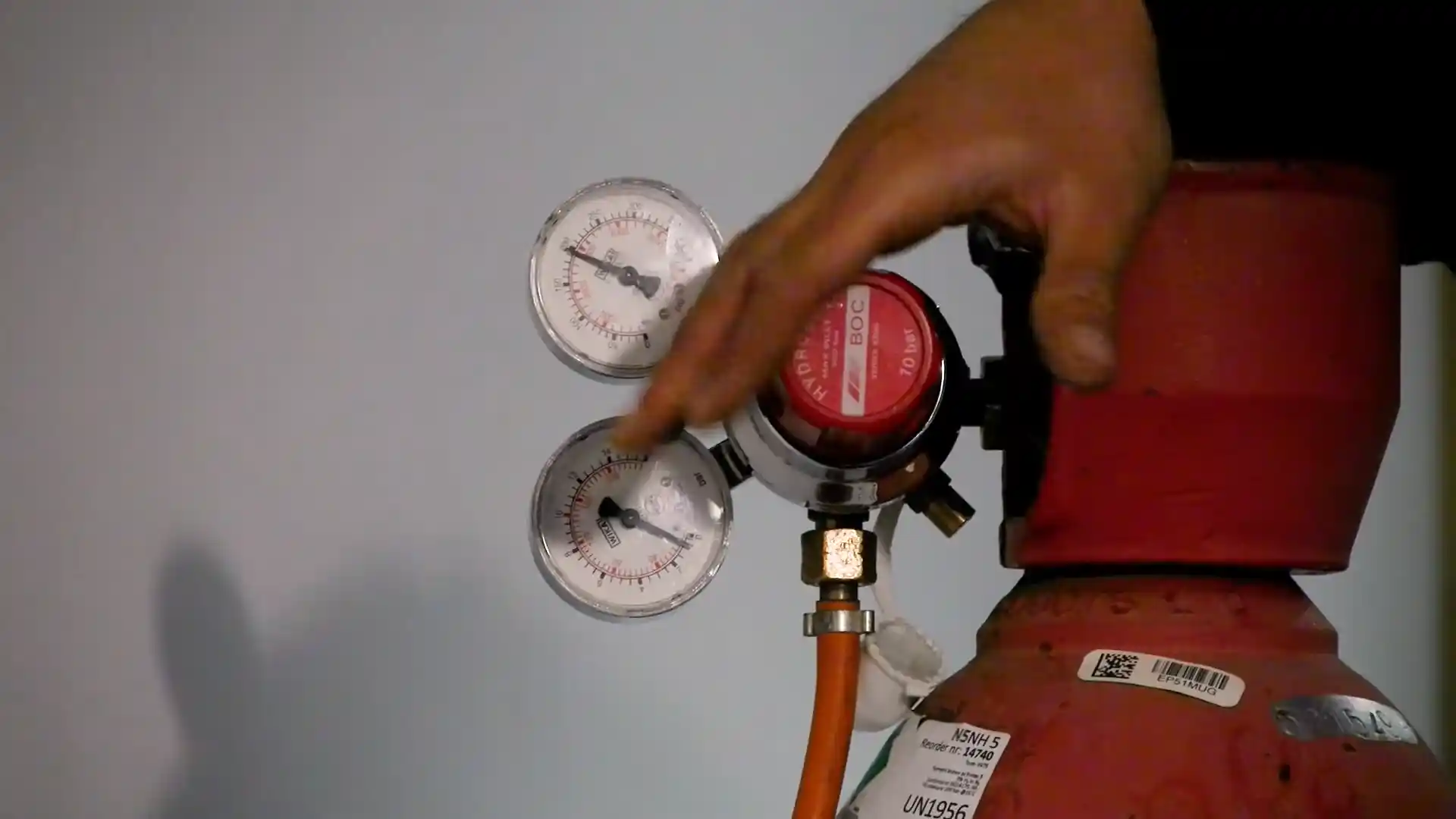
The gas blend and why it works
The standard blend for underground pipe work is five percent hydrogen and ninety-five percent nitrogen. At that ratio the mixture is non-flammable, non-toxic, and approved for potable water systems. Hydrogen is the lightest element and rises through soil readily. A detector calibrated to hydrogen reads at parts-per-million sensitivity, so even a very slow fracture in a buried pipe produces a readable concentration plume at the surface above it. The nitrogen carrier keeps the blend inert and prevents any reaction with oxygen in the surrounding soil.
On Round Rock's clay east side, dense soil dampens acoustic signals and holds moisture that can confuse surface readings. Tracer gas is particularly effective there because it rises through the clay regardless of acoustic or moisture conditions around it.
From pressurized pipe to surface detector
We isolate the section under test, drain the water from it, and connect a supply to bring the line to a safe test pressure with the hydrogen/nitrogen blend. We then wait a brief period for the gas to permeate through the fracture and begin rising through the soil column above. A calibrated hydrogen detector wand sweeps the surface along the pipe path, reading concentration at each step. The reading climbs as the wand approaches the exit point and peaks at the breach location. We mark the spot, verify with a second pass, and plan the excavation to that point.
If a buried line has a confirmed meter loss and the location is uncertain, call (512) 737-6168 and tracer gas typically resolves it in one visit.
Where tracer gas outperforms acoustic
Acoustic requires the pipe to be under working water pressure producing measurable turbulent flow at the breach. Tracer gas does not.
For a line too degraded to hold full working pressure safely, or for a seep too slow to generate a detectable acoustic signal, the gas method steps in. Long runs under hardscape where walking a ground microphone is impractical are another strong application. Non-metallic pipe that couples poorly to acoustic responds well to tracer gas, since the gas rises through whatever surrounds it regardless of pipe material.
Irrigation mains and domestic service lines
The two most common tracer gas applications in a Round Rock yard are the domestic water service between the meter and the house and the irrigation mainline. Both run buried, both are pressurized, and both can fail at a joint or coupling with no surface sign beyond a climbing bill. Tracer gas locates the breach to within a few inches so the excavation is a single small opening rather than an exploratory trench. Restoring a yard after a precise targeted dig is a small task compared to the disruption of a search that opens the ground along the whole run.
Cleanup and return to service
After the test we vent and purge the line of gas before restoring water service. The hydrogen/nitrogen blend disperses harmlessly into the atmosphere, leaving no residue in the pipe, the soil, or the water. There is no odor, staining, or chemical trace at the surface after dispersal. The brief isolation, test, and purge of the tested section is a standard procedure we complete before closing the job. Call (512) 737-6168 if an underground leak is confirmed on the meter and you want it precisely located before any ground opens.
Not sure what you are dealing with? Talk it through.
📞 (512) 737-6168Frequently Asked Questions
Is tracer gas safe for a drinking water pipe?
Yes. The hydrogen/nitrogen blend is non-toxic and non-flammable at the test ratio. After detection the line is vented and purged before water service resumes, leaving no residue.
How is tracer gas different from helium detection?
Tracer gas uses a hydrogen/nitrogen blend suited to long buried runs in soil where the gas permeates upward to a surface wand. Helium uses pure helium, which excels at micro-fractures, slab applications, and pool liner leaks where the detector reads concentration directly above the crack.
How long does the gas take to surface?
On a typical buried line at a few feet of depth, a readable concentration appears within a few minutes of pressurizing. Dense clay or greater depth can extend that to fifteen or twenty minutes before the sweep begins.
Related leak services
Underground mainline, zone valve, and lateral leaks in the irrigation system.
View → UndergroundWet patches and a moving meter from buried lines in the yard.
View → Helium DetectionHelium molecules escape through micro-fractures water can barely pass.
View →Browse all 54 services Areas we cover · Leak guides on the blog