
Pressure Regulator Valve Leak Detection and Repair in Round Rock, TX
The pressure regulator valve sits between the city main and your home's plumbing, reducing street pressure to a safe household level. When it fails, every pipe, fixture, and appliance in the house absorbs pressure it was never designed to handle.
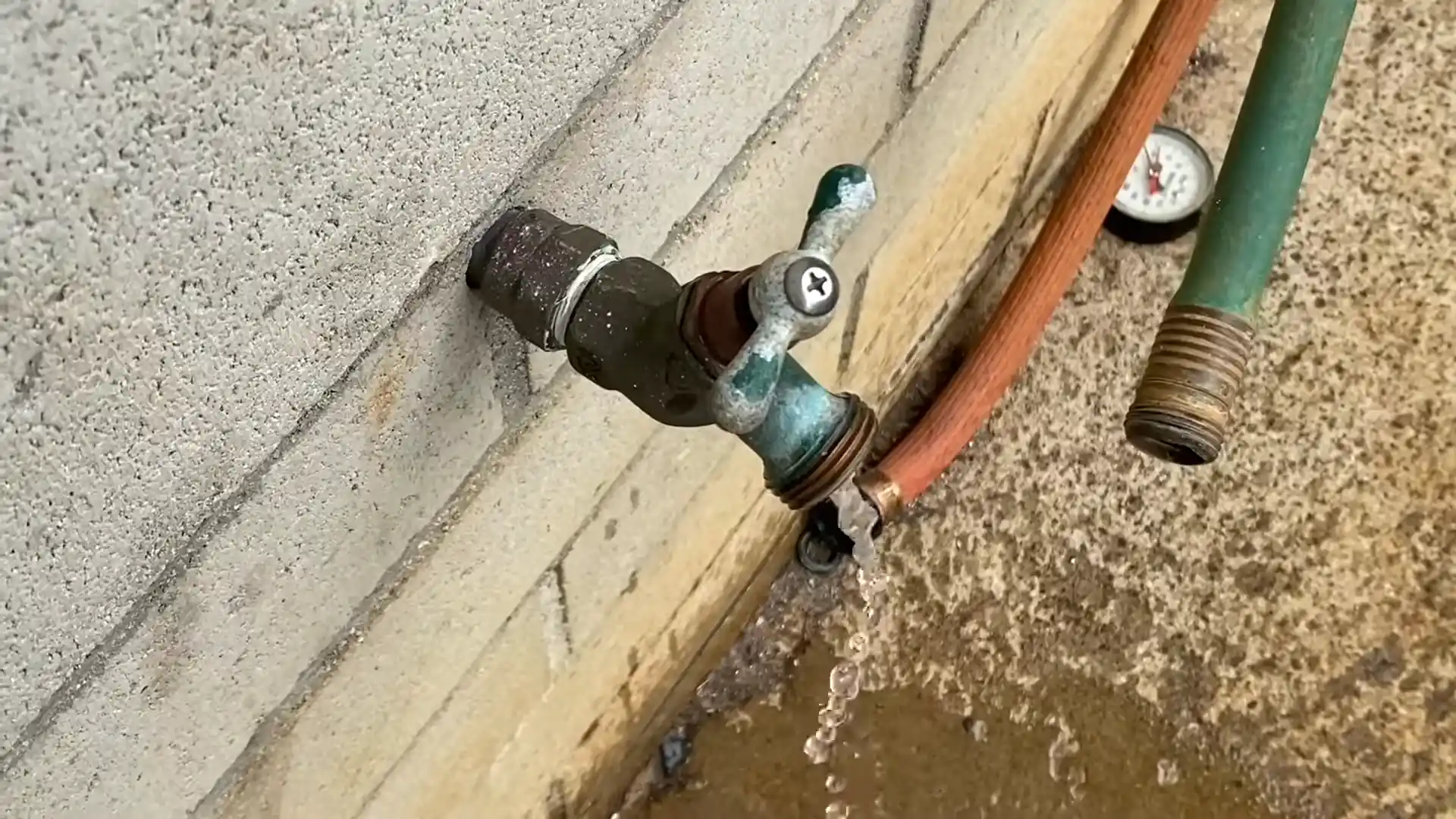
What the PRV does
City water mains run at pressures that would damage household plumbing, often 80 to 150 psi. The pressure regulator valve, installed where the main line enters the house, steps that down to the 40 to 80 psi range the fixtures and supply lines are rated for. While it is working, the PRV is invisible. When it fails, the downstream damage accumulates fast: fittings weep, faucet seals blow, toilet fill valves cycle constantly, and water heater pressure relief valves discharge to protect themselves. None of that looks like a PRV problem until you measure the pressure.
Homes on Round Rock's west side, near the older infrastructure serving the limestone neighborhoods, sometimes see city pressure variability that stresses an aging PRV more than newer areas.
Signs the PRV is failing
The clearest sign is a pressure gauge on a hose bib reading above 80 psi with everything off. Other tells are subtler. A water hammer knock, faucets that drip shortly after being repaired, a water heater relief valve that releases, and a hose bib that geysers when opened all point the same direction. None of these individually require a pressure check, but two or three together in the same house strongly suggest the regulator is not holding the downstream pressure down.
If fixtures keep failing after repair, call (512) 737-6168 and we can measure the pressure first.
Testing and replacing the PRV
We measure the static pressure at a hose bib with everything off, then confirm it again with normal household flow running.
A reading consistently above 80 psi confirms the regulator is not holding. Some PRVs can be rebuilt by replacing the internal cartridge without swapping the whole body; others, especially older bronze bodies that have corroded, are better replaced entirely. We size the replacement to the service line and set the downstream pressure to a level that protects the fixtures without starving the irrigation system. Too low a setting cuts the flow in the upper floor; too high leaves the pipe and fittings under more stress than they need to carry. We size the replacement to the service line and set it to the correct pressure before releasing the main valve.
Why it matters for leak prevention
A failed PRV is one of the more direct causes of repeated plumbing leaks. When the downstream pressure climbs, every connection and seal takes the excess load continuously. Pinholes appear sooner in hard-water copper. Supply lines under sinks and toilets fail well ahead of their rated life. CPVC installed in 2000s homes goes brittle faster under the added stress. Replacing a PRV is cheap compared to the serial leaks and water heater relief valve replacements that follow a failed one. We can set the correct pressure and document it so the repair stands up for any insurance or home-inspection record.
A note on expansion tanks
Homes with a backflow preventer or check valve on the supply, which most Round Rock homes now have, are a closed system. When a PRV reduces pressure and the water heater heats the water, that expansion has nowhere to go but back up into the supply. An expansion tank installed at the water heater absorbs that thermal expansion and keeps pressure stable. We check whether one is in place when we replace a PRV, because a new regulator in a closed system without an expansion tank sees pressure spikes that shorten its life. Call (512) 737-6168 if you want the full pressure picture.
Not sure what you are dealing with? Talk it through.
📞 (512) 737-6168Frequently Asked Questions
How do I know if my PRV is failing?
Measure the pressure at a hose bib with everything off. Consistently above 80 psi means the regulator is not holding. Water hammer, faucets dripping after repair, and a relief valve discharging are softer signs.
Can a PRV be repaired or does it need replacing?
Some models can be rebuilt with a new cartridge. Older corroded bodies are better replaced entirely. We inspect first and recommend the option that holds longer.
What is an expansion tank and do I need one?
It absorbs the pressure created when a water heater heats a closed system. Most Round Rock homes now have a check valve on supply, making it a closed system. We check whether one is in place when we replace the PRV.
Related leak services
Pressure drops and high bills from the main service line.
View → PipeHidden leaks in the supply lines running through walls and ceilings.
View → Whole-House RepipeWhen cumulative pipe failure makes patching the wrong choice.
View →Browse all 54 services Areas we cover · Leak guides on the blog