
Hot Tub Leak Detection and Repair in Round Rock, TX
A portable hot tub keeps its plumbing inside a cabinet, packed in foam insulation. That makes the leak invisible from the water but reachable from the side, which changes how we hunt it down.
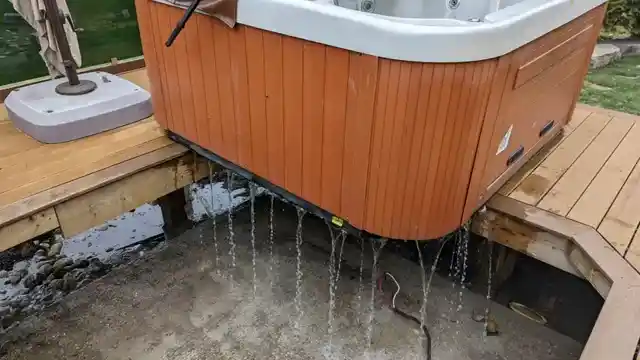
A self-contained unit
Unlike a built-in spa, a portable hot tub is a sealed unit sitting on a pad, with the pump, heater, and all the plumbing tucked behind removable side panels. The water you see rarely shows where the leak is, because most failures happen on the equipment side inside the cabinet. The good news is that everything is reachable. We do not dig; we open the right panel and look.
Plenty of Round Rock backyards, from Mayfield Ranch to older parts of town, have a hot tub on the patio that started leaving a wet ring on the slab.
Finding the wet spot in the foam
Most portable tubs are filled with foam insulation, which both hides and reveals a leak. We pull the access panels and look for the trail: foam that is wet, stained, or crusted with mineral scale leads back toward the source. A heater that short-cycles or an error code can point at a flow problem from a leak. Running the tub with a panel open lets us watch a union or seal actually weep under pressure, which is the surest way to name the part.
If your hot tub leaves a wet ring on the slab, call (512) 737-6168 and we can open it up and trace it.
The usual culprits inside
A few parts cause most portable-tub leaks. The pump has a wet-end seal that wears and drips as it ages. The unions on either side of the pump and heater loosen with constant heat cycling. The jet bodies and their internal plumbing can crack or weep at the glued joints, and the heater housing itself can corrode. Each leaves its own wet trail in the foam, which is why opening the cabinet and reading that trail matters more than guessing from the waterline.
Repairs without tearing the tub apart
The repair is usually a part, not a rebuild. A worn pump seal is replaced, a loose or cracked union is rebuilt and tightened to survive the heat cycling, and a weeping jet body is resealed or swapped. A corroded heater is replaced where the housing has failed. We work through the access panels and test the tub under power before closing up, so you are not left wondering whether the drip is truly gone.
Where the shell itself is cracked, we are honest about whether a repair will hold or the tub is near the end.
Access is the quiet advantage with a portable tub. Because the plumbing lives behind removable panels rather than buried in concrete, almost every repair is reachable without disturbing the patio or the surround. We open the panel the leak points to, make the fix in place, and put the cabinet back the way we found it. No demolition, just the right panel off and on.
Why hard water is rough on a hot tub
A hot tub runs hot water through a small, closed loop, which is exactly the condition that drives scale. Round Rock's water near 15.2 grains per gallon deposits minerals inside the heater and on the seals every time the tub heats. That buildup wears the wet-end seal and stiffens the unions until they leak. A tub that needs constant topping off also runs its heater harder. Catching the leak early keeps it a seal or a union swap. Call (512) 737-6168 and we can take a look.
Not sure what you are dealing with? Talk it through.
📞 (512) 737-6168Frequently Asked Questions
How do you find a leak in a portable hot tub?
We pull the side access panels and read the foam: wet, stained, or scaled foam leads back to the source. Running the tub with a panel open shows a union or seal weeping under pressure.
What part of a hot tub usually leaks?
Most often the pump's wet-end seal, the unions around the pump and heater that loosen with heat cycling, or a cracked jet body. The heater housing can also corrode over time.
Is a hot tub leak worth repairing?
Usually, yes. Seals, unions, and jet bodies are straightforward part swaps. Only a cracked shell raises the question of replacement, and we will give you an honest read on that.